I Chose the Wrong Line (and Apparently This Was an Emergency)

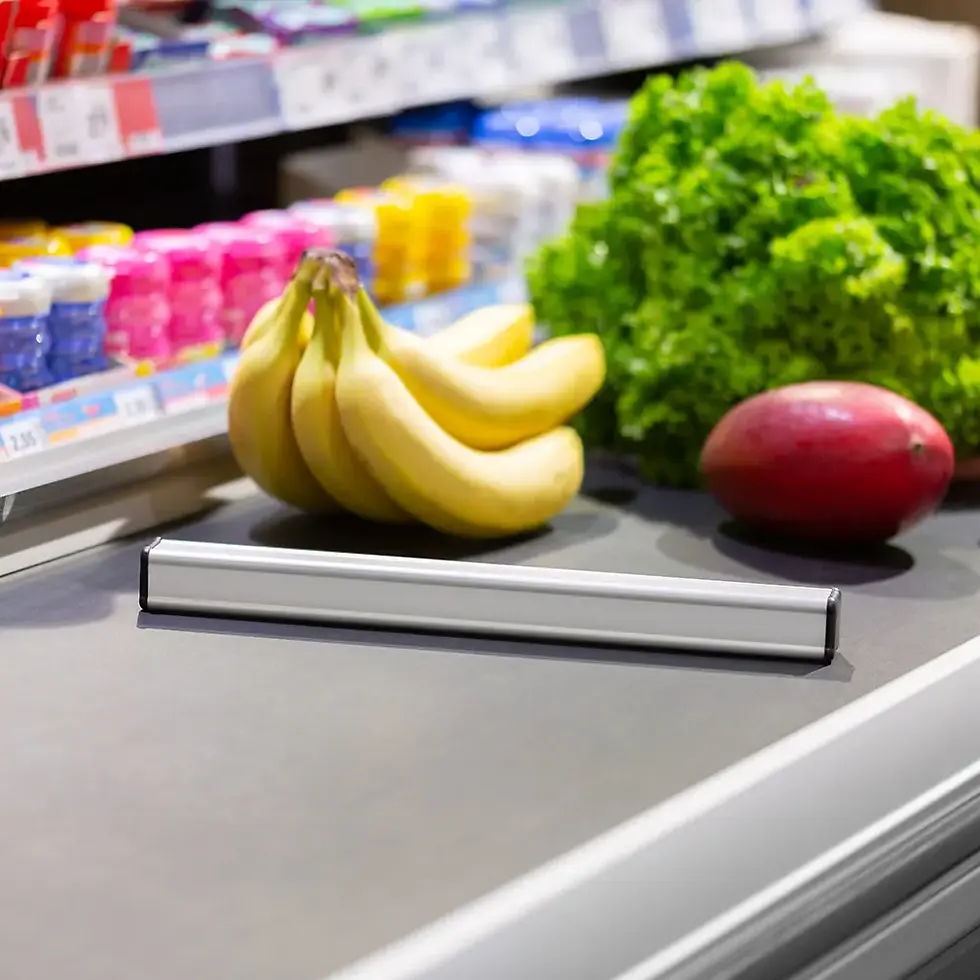
There are moments in life when you discover something important about yourself. Sometimes this happens during therapy, sometimes during a major life transition, and sometimes after years of reflection and personal growth.
And sometimes it happens because you chose the wrong checkout line at the grocery store.
I chose the shortest line. I would like this fact entered into evidence, because what happened next was clearly not my fault.
There were only two people ahead of me. The neighboring line had at least four. I assessed the situation carefully, considered the available evidence, and made what appeared to be an entirely rational decision. For approximately thirty seconds, I felt quite pleased with myself.
Then my line stopped moving.
The other line did not.
A person who had arrived considerably after me was now unloading groceries onto the conveyor belt. I noticed this, of course.
Within approximately forty-five seconds, I was no longer a psychologist buying groceries. I was a researcher conducting a detailed longitudinal study of everyone who had made a better checkout decision than I had.
The woman in the other line had reached the cashier. Interesting. The man behind her had already begun unloading his groceries. Very interesting.
Meanwhile, the person in front of me appeared to be involved in a transaction requiring considerably more international diplomacy than I had anticipated.
This is also approximately when a particularly efficient part of me arrived.
The Part of Me Responsible for Preventing the Waste of Three Minutes
I apparently have a part whose official job title is Director of Preventing the Unnecessary Waste of Three Minutes. It had opinions: We chose the wrong line.
Yes. This was becoming apparent.
We should switch.
The other line now had six people.
Still. This is inefficient.
And there it was: that wonderfully disproportionate sense of urgency that can appear when absolutely nothing urgent is happening.
I wasn't late for anything. Nobody was waiting for me. There was no emergency requiring me to leave the grocery store immediately. I was simply standing there, which, according to the Director, was apparently unacceptable.
At first, it would have been easy to dismiss this as impatience. But one of the ideas I particularly appreciate about Internal Family Systems (IFS) is the principle that there are no bad parts. Even the parts of us that worry, criticize, control, hurry, overthink, or insist that three additional minutes in a grocery store represent a serious misuse of one's limited time are usually trying to help somehow.
So perhaps my Director didn't need to be fired.
Perhaps it needed to be interviewed.
Having apparently completed my longitudinal study of neighboring checkout lines, I changed methodologies and became an investigative journalist.
So... Tell me more about this three-minute situation.

When Waiting Becomes Wasting
Once I became curious rather than annoyed, the Director's position wasn't actually that ridiculous.
This part values time. It wants me to be responsible, productive, prepared. It doesn't want me to fall behind or discover later that I could have done something better, faster, or more efficiently.
Those aren't terrible intentions. In fact, this part has probably been enormously helpful to me over the years. It gets things done. It remembers deadlines. It plans ahead. It has almost certainly prevented me from missing more than one airplane.
So rather than telling it to relax (which, incidentally, has perhaps never caused an anxious part in the history of humanity to relax) I could get curious.
What are you worried would happen if we just stood here?
And suddenly that was a much more interesting question, because perhaps this wasn't really about three minutes.
Maybe it was about what those three minutes represented.
We're wasting time. We should be doing something. We're falling behind. Other people are moving and we're standing still.
There it was.
Other people are moving.
The investigation had taken an unexpected turn.
The Other Line Is Moving
I realized that I probably would have been considerably less bothered by my stationary line if all the other lines had been stationary too.
If every register had stopped, I suspect I would have accepted the situation fairly quickly. Busy day. Computer problem. These things happen.
But watching someone who arrived after me leave before me? Completely different psychological event.
Because now my efficient part had evidence.
See? We chose wrong.
And my brain had access to something particularly compelling: an alternative reality.
If I'd chosen that line, I'd be leaving now.
Humans are remarkably good at constructing these parallel versions of our lives. If I'd taken that job, maybe I'd be happier. If I'd made that decision earlier, I'd be further along. If I'd started sooner. If I'd known then. If I'd chosen differently.
Suddenly we're not simply experiencing the life we're in. We're comparing it with the imaginary life happening three checkout lanes away.
And imaginary lives have an enormous advantage over real ones: we don't actually have to live them.
They contain none of the complications, disappointments, unexpected delays, or people searching through their bags for a coupon from 2019. We see only the line moving.
Everyone Else Appears to Be in the Faster Line
The same strange mathematics shows up in much bigger places.
We may feel reasonably content with where we are until someone else gets promoted, moves somewhere exciting, publishes something, buys a house, changes careers, runs a marathon, or apparently discovers the secret to keeping basil alive for more than six days.
Nothing about our own life has changed.
But suddenly there is another line moving faster.
And our parts notice.
Shouldn't we be further along? Are we behind? Did we choose wrong?
This is where I think curiosity becomes much more useful than criticism. Instead of Why am I being so ridiculous?, I can ask: What are you afraid it means if someone else gets there first? What are you trying to make sure happens for me? What do you need me to understand?
Those are very different questions.
The goal isn't to prove the part wrong. It's to understand why it cares so much.
And sometimes, once we listen, we discover that the thing the part is protecting is much more important than the thing that activated it. Three minutes may not matter at all, but being competent might. Being responsible might. Making good use of our lives might. Not falling behind might.
Those concerns deserve considerably more compassion than my grocery-store impatience initially suggested.
The Trouble With Comparing Lines (or Why Comparing Yourself to Others Can Feel So Convincing)
There's another problem with watching the other checkout line: we don't actually know very much about it.
We know that it is moving right now.
That's about it.
We don't know whether it will stop thirty seconds later. We don't know whether the cashier will need a price check. We don't know whether someone will produce seventeen coupons, twelve of which expired during the previous presidential administration.
And yet, with very little information, our minds are quite capable of reaching a sweeping conclusion:
Their line is better.
We do something similar with people.
We see the promotion but not the years of uncertainty before it. We see the new house but not the mortgage discussion. We see the career change but not the sleepless nights that preceded it. We see someone's accomplishment but rarely the entire complicated life surrounding it.
Meanwhile, we know everything about our own line.
Every delay. Every doubt. Every decision we wish we'd made sooner. Every moment when nothing seems to be moving.
It's not exactly a fair comparison.
Maybe There Isn't a Right Line
I think this is where the grocery store starts looking suspiciously like the rest of life.
We spend an extraordinary amount of energy trying to choose the right line: the right career, the right relationship, the right place to live, the right time to make a change, the right decision about something we cannot possibly know enough about yet.
And then, understandably, we look around for evidence that we chose correctly.
But life rarely gives us a controlled experiment. We don't get to live both versions and compare the results.
We choose one line, and then we stand in it while other possibilities continue alongside us.
Sometimes another path really would have been easier. Sometimes we make decisions we later regret. Sometimes changing direction is exactly what we need to do. Becoming curious about our parts doesn't mean convincing ourselves that every choice we've made was secretly the correct one.
It simply gives us another way of responding when uncertainty or comparison activates something inside us.
Instead of immediately becoming I am wasting time, perhaps I can notice:
A part of me is really worried that I'm wasting time.
And then I can turn toward it rather than away from it.
I wonder why this matters so much to you.
That's not ignoring the part or telling it that its concerns aren't real. It's beginning a conversation with it.
And perhaps that conversation reveals something useful. Maybe I really do need to make a change. Maybe I've been ignoring something important.
Or perhaps my internal Director simply needs to know that standing still is not always the same thing as falling behind.
Still in Line
Eventually, of course, my line moved.
There was no dramatic breakthrough. No grocery-store epiphany announced over the loudspeaker. The transaction ahead of me ended, the groceries moved forward, and it became my turn.
The several minutes that had briefly seemed so important became completely irrelevant almost immediately.
My Director of Preventing the Unnecessary Waste of Three Minutes is still employed. I'm not sure it would accept retirement anyway.
And perhaps it doesn't need to.
It has useful skills. It cares deeply about my time. It wants me to accomplish things that matter to me. It would simply prefer that all of this happen efficiently, on schedule, and preferably without anyone in an adjacent checkout line getting there first.
I can appreciate that.
And the next time it becomes particularly loud, perhaps I can put down my clipboard, stop collecting data on the neighboring checkout lines, and return briefly to investigative journalism.
What are you worried about? What are you trying to do for me? What do you need me to know?
Maybe something important will emerge.
Or maybe I'll discover that nothing terrible is happening. I haven't fallen behind. I haven't ruined my life through poor checkout-line selection.
I'm simply waiting for my turn.
Next to the avocados.
For approximately three minutes.

You Might Also Like
If this grocery-store adventure felt a little familiar, you might enjoy these other reflections on the psychology hiding in ordinary moments:
The Decision You Can’t Quite Make (and Why It Feels So Hard) Why some decisions keep us circling between possibilities—and what uncertainty, competing parts, and the search for the “right” answer may have to do with it.
The Missed Turn (and Why My GPS Is Better at Change Than I Am) A wrong turn becomes a reflection on adapting to change, recalculating when life doesn't follow the expected route, and moving forward without treating the detour as a failure.
IFS for Navigating Big Life Changes A closer look at how different parts of us respond to uncertainty and change—and how approaching them with curiosity can help us understand what they are trying to protect.
My Profession Is Living Life (and Other Things I Thought About in a Taxi in Milan) A song heard in a taxi becomes a reflection on values, everyday life, and what it means to make room for both the familiar and the unknown.


Comments